- Faith Activist
- Posts
- The Forgotten Purpose of Advent
The Forgotten Purpose of Advent
Before celebrating the manger, the church longed for the return of the King.
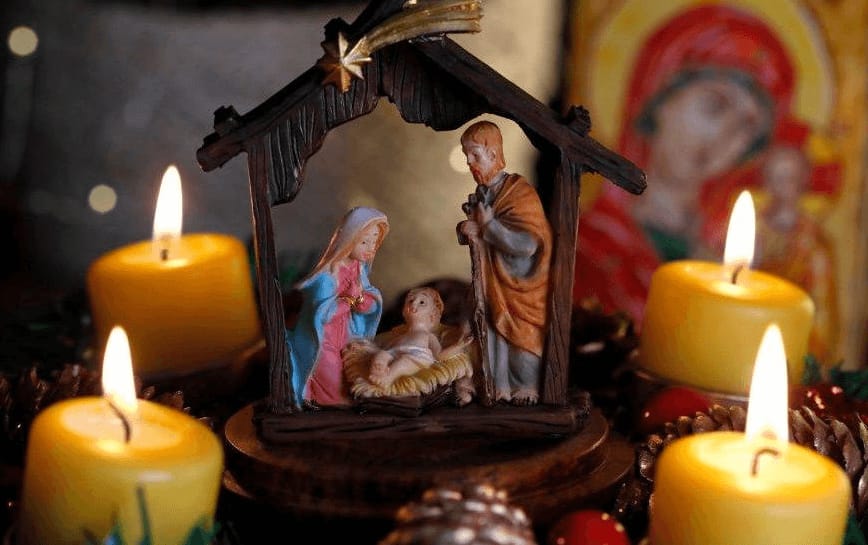
The season of Advent is often wrapped in warm familiarity candles lit in succession, nativity displays, and calendars counting down to December 25. In today’s Christian culture, Advent is widely associated with preparing our hearts for Christmas, centering on the birth of Jesus in Bethlehem. But historically, the church celebrated Advent with a broader and more forward-looking perspective: not only remembering Christ’s first coming, but also longing for his second.
This dual orientation of Advent retrospective and anticipatory was once central to the Christian calendar. By revisiting its origins, we can rediscover the season’s fuller, richer meaning and recalibrate our hearts not only to the manger, but to the coming of our King in glory.
From Resurrection to Incarnation
Interestingly, the early church paid little liturgical attention to Jesus’s birth. In the first two centuries, there is almost no record of any celebration of Christmas. Instead, the central feast of Christian life was Easter. This makes sense when we consider the weight of the New Testament’s focus on the Passion, crucifixion, and resurrection of Christ. Paul even hints at this in 1 Corinthians 5:7–8, where he speaks of Christ as our Passover Lamb.
By the late second century, however, the church began developing interest in the physical birth of Jesus. In an age when Christ’s full humanity was often questioned, affirming his incarnation became an important apologetic concern. Eventually, consensus developed around two dates: December 25 and January 6. December 25 became Christmas, and January 6 became Epiphany, emphasizing Jesus’s manifestation to the Gentiles.
The selection of December 25 was not random. Church fathers like Tertullian believed Jesus was conceived on March 25, the same date as his crucifixion, based on early Christian readings of Daniel’s prophecy. This symmetry was seen as fitting in God’s design: the day of his miraculous conception coinciding with the day of his sacrificial death. As Augustine of Hippo wrote, “He is believed to have been conceived on the 25th of March, upon which day also He suffered.”
Advent’s Liturgical Development
As the church began to celebrate Christ’s birth, it also developed a season of preparation similar to Lent. By the fourth century, various local churches had begun observing periods of reflection leading up to Epiphany or Christmas. The Council of Saragossa in 380 mentions a three-week period of spiritual focus in December. Rome, by the same era, began structuring a more formal Advent liturgy.
By the sixth century, fasting on Mondays, Wednesdays, and Fridays from November 11 (Martin of Tours Day) through Christmas became common in France. Pope Gregory I, known as Gregory the Great, significantly shaped Advent by composing liturgical prayers, songs, and readings that reflected both Christ’s nativity and his second coming.
These practices spread across Europe, and by the eleventh century, Pope Gregory VII standardized the four Sundays leading up to December 25 as the official Advent season. It was a time of celebration but not just for what had already happened. The church looked ahead with eager hearts toward what was yet to come.
A Season of Two Comings
What many overlook today is that Advent was never just about the birth of Christ it was equally about his return. The Latin word adventus means “coming,” and in Scripture, its Greek counterpart, parousia, refers exclusively to the second coming of Christ. This forward-looking hope was central to early Advent observances.
Advent sermons throughout church history often focused not on shepherds or wise men, but on eschatological texts: Jesus’s own words about his return in glory (Matthew 24:37–44), signs in the heavens (Luke 21:25–36), and even the Triumphal Entry (Matthew 21:1–9) as a foretaste of his victorious return.
Church leaders like Leo the Great encouraged believers to rejoice in both the gift of the incarnation and the promise of Christ’s second advent: “We are born for the present and reborn for the future,” he said. Christians were to lift their eyes from the manger and fix them on the heavens, anticipating the appearing of the One who would bring final restoration.
Singing Toward the Second Coming
This dual focus wasn’t just heard in sermons it echoed in song. The Great Antiphons, or the “O” Antiphons, emerged in the sixth century as a series of Advent hymns sung in the days leading up to Christmas. Each began with a title for the Messiah “O Wisdom,” “O Root of Jesse,” “O King of Nations” culminating in heartfelt pleas for his return.
You may recognize their translation in the beloved carol “O Come, O Come, Emmanuel,” which retains the rich longing of the early church:
O come, Thou Key of David, come
And open wide our heavenly home;
Make safe the way that leads on high,
And close the path to misery.
Even the ever-popular “Joy to the World,” penned by Isaac Watts, speaks more of the second coming than the first:
No more let sins and sorrows grow,
Nor thorns infest the ground;
He comes to make His blessings flow
Far as the curse is found.
The music of Advent, when we pay attention, is steeped in hope not just that Jesus came, but that he will come again.
Recovering the Fullness of Advent
Modern Advent celebrations often revolve around four themes: hope, peace, joy, and love. These are beautiful and biblical, but they only tell part of the story. Historically, the church used Advent as a time of preparation not merely for gift-giving or seasonal reflection, but for readiness readying the heart for the King’s return.
A recent Lifeway Research survey found that only 33% of Protestant pastors say they preach sermons that reflect on Christ's second coming during Advent. This represents a significant shift from earlier centuries, when the second coming was the dominant theme of the season. As our culture grows more focused on the nostalgia of Christmas, the church must remember its forward-facing posture.
What if this year, we recovered the full meaning of Advent? What if our services, our songs, and our reflections gave equal weight to the second advent of Christ? What if we embraced Advent not just as preparation for Christmas, but as a holy yearning for the day when Jesus will wipe away every tear, destroy death forever, and establish his eternal kingdom (Revelation 21:4)?
In a world desperate for hope, Advent reminds us that the manger was not the end of the story. It was the beginning of the end of all sorrow. We wait with joyful expectation, not just remembering the past but clinging to the promise of the future. Let us believe what we sing and sing what we believe: Rejoice! Rejoice! Emmanuel Shall come to thee, O Israel.
If this brought deeper meaning to your Advent season, consider sharing it or subscribe to our newsletter for more reflections like this.
Reply