- Faith Activist
- Posts
- The True Origins of Eight Weird Christmas Traditions
The True Origins of Eight Weird Christmas Traditions
How one ancient hymn continues to stir our deepest longing for God’s presence.
Christmas is a season of wonder, joy, and deep spiritual significance. It's when we celebrate the birth of our Savior, Jesus Christ, whose arrival fulfilled centuries of prophecy and brought salvation to the world. But let’s be honest Christmas can also get a little weird.
From hanging flammable socks over fireplaces to sneaking a kiss under suspicious plants, many beloved Christmas traditions have origins that range from charming to downright bizarre. As we deck the halls and trim the tree, let’s take a look at the strange (but true) backstories behind eight of these popular customs and what they reveal about the holiday spirit.
1. Christmas Trees
Martin Luther, the great Reformer, is often credited with popularizing the Christmas tree. Legend has it that he was inspired by the beauty of stars shining through evergreens and decided to bring that imagery indoors literally by placing candles on a tree to mimic the starlight. Romantic? Yes. Safe? Not at all. Lit candles on dry pine? Let’s just say early Christmases were not fire-insured.
The custom itself likely has older roots, possibly adapted from pagan winter solstice rituals that celebrated life in the midst of dark seasons. But Christians reimagined the evergreen as a symbol of eternal life through Christ a fitting reminder during the darkest time of the year.
2. Stockings
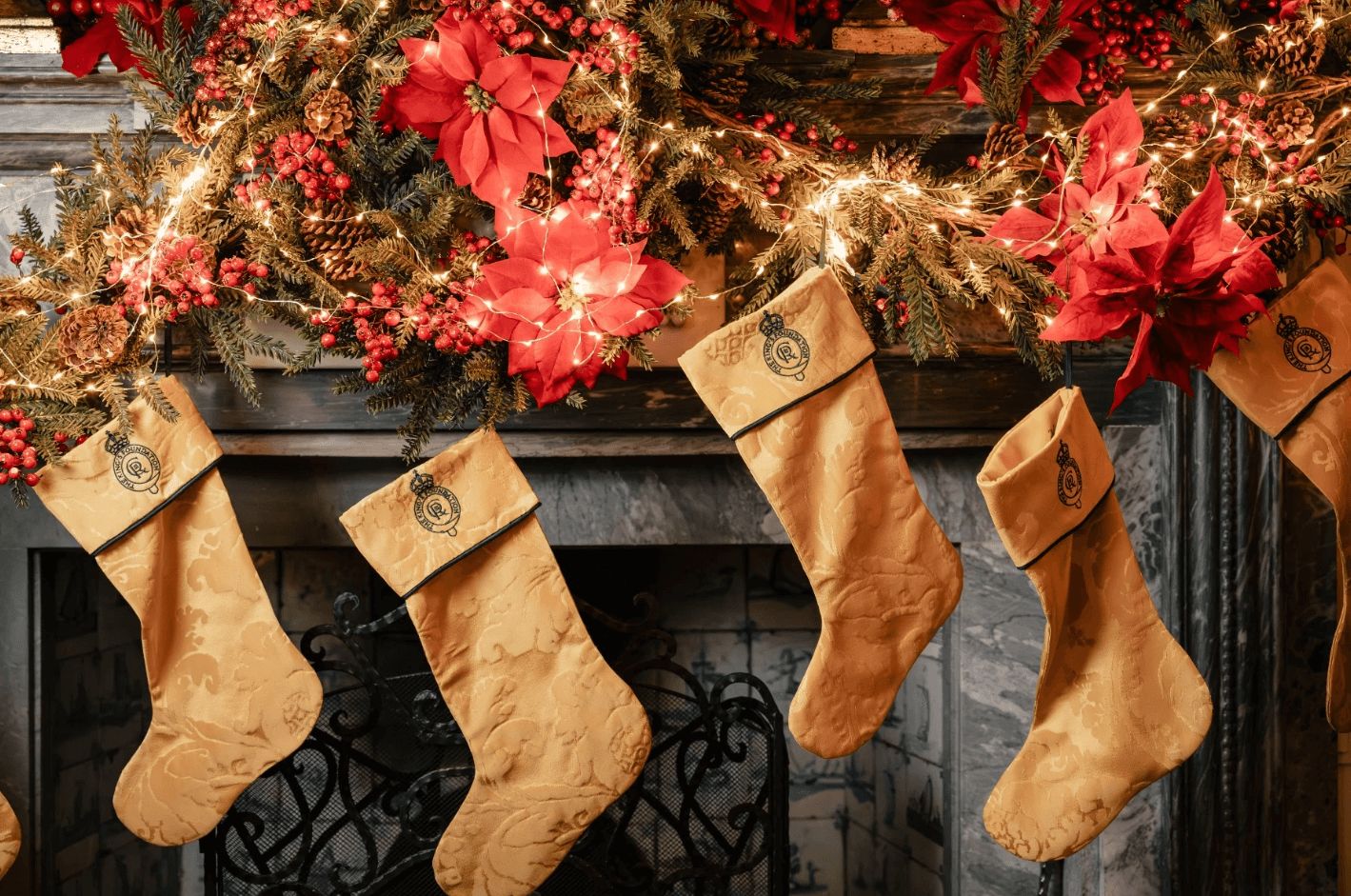
The idea of stockings dates back to 12th-century Europe, where nuns reportedly told children to leave their shoes out in hopes of receiving gifts from a mysterious “night visitor.” These early acts of charity evolved into the modern tradition of hanging stockings by the chimney. The "visitor" may have originally symbolized Saint Nicholas, known for his anonymous generosity.
And yes, the idea of someone creeping into homes at night is odd but somehow, we’ve collectively agreed it’s wholesome as long as cookies are involved.
3. Nativity Scenes
Nativity scenes especially the kind featuring cartoon animals and glittery angels often compress a story that actually unfolded over a longer timeline. While baby Jesus in the manger with Mary and Joseph is spot-on, the wise men likely didn’t show up until months (or even years) later, and there’s no definitive biblical mention of how many there were or that animals surrounded them at the birth.
Still, these scenes help anchor our celebrations in the central miracle of Christmas Emmanuel, God with us.
4. Mistletoe
This innocent-looking plant has a murky past. Used by Druids to ward off evil spirits and later tied to Norse mythology, mistletoe has seen a lot. Eventually, it became a symbol of love and fertility, leading to the rather awkward tradition of kissing underneath it.
Some churches even banned mistletoe in the past because of its questionable roots. Today, it’s a fun tradition but let’s all agree: no kiss should ever be given without clear consent.
5. The 12 Days of Christmas
You’ve heard the song partridges, pear trees, and an army of drummers. But did you know it originated in 18th-century England as a memory game for children? Some even believe it was used as a coded catechism tool during times when public expressions of Christian faith were suppressed.
Whether or not that theory holds up historically, the song does point to something meaningful the 12 days after Christmas (from December 25 to January 6), which the Church traditionally set aside to reflect on the Incarnation. Though let’s be honest, we still don’t know what anyone would do with ten lords a-leaping.
6. Christmas Elves
Tiny assistants in Santa’s workshop didn’t originate in the Bible (shocking, we know). In fact, they were popularized in the 19th century through children's books and plays one notable example being The House of Santa Claus: A Christmas Fairy Show for Sunday Schools in 1876.
Yes, a fairy show for Sunday school. Somehow, it all came together to create the concept of industrious elves crafting toys for good little boys and girls. It's whimsical, sure but probably not what the shepherds had in mind on that holy night.
7. Yule Goat
In parts of Scandinavia, a straw Yule Goat is a popular Christmas decoration. Its roots trace back to Nordic mythology, but by the 11th century, it was tied to a Christian symbol: a goat being led by Saint Nicholas to represent Christ’s authority over evil. It’s an odd image but also a powerful one.
While it may look like just another festive ornament today, the Yule Goat carries a deeper, symbolic message of Jesus as the One who conquers darkness.
8. Gingerbread
Here’s a sweet tale according to one lesser-known tradition, a "fourth wise man" set out to meet baby Jesus, bringing ginger as a gift. He got sick along the way and was treated by a rabbi who spoke of the Messiah being born in Bethlehem “House of Bread.” Inspired (and hungry), they baked gingerbread to honor the prophecy.
While apocryphal, it’s a reminder that even our holiday treats can point us to something greater. Gingerbread, in this case, becomes more than just dessert it’s a symbol of preparation, worship, and anticipation of Christ.
Finding Christ in the Chaos
These stories remind us that Christmas traditions are often a blend of sacred and silly, myth and meaning. But beneath the weirdness, we can trace the unmistakable thread of the Gospel. Light breaking into darkness. God stepping into human history. A baby born in Bethlehem, who would grow to bear the sins of the world.
So yes, decorate the tree. Hang the stockings. Laugh at the quirks of the season. But above all, remember what anchors it all Jesus, the greatest gift ever given.
If this added a little joy or insight to your Christmas season, consider sharing it or subscribing to our newsletter for more stories like this.
Reply